Iraq / Field Guide
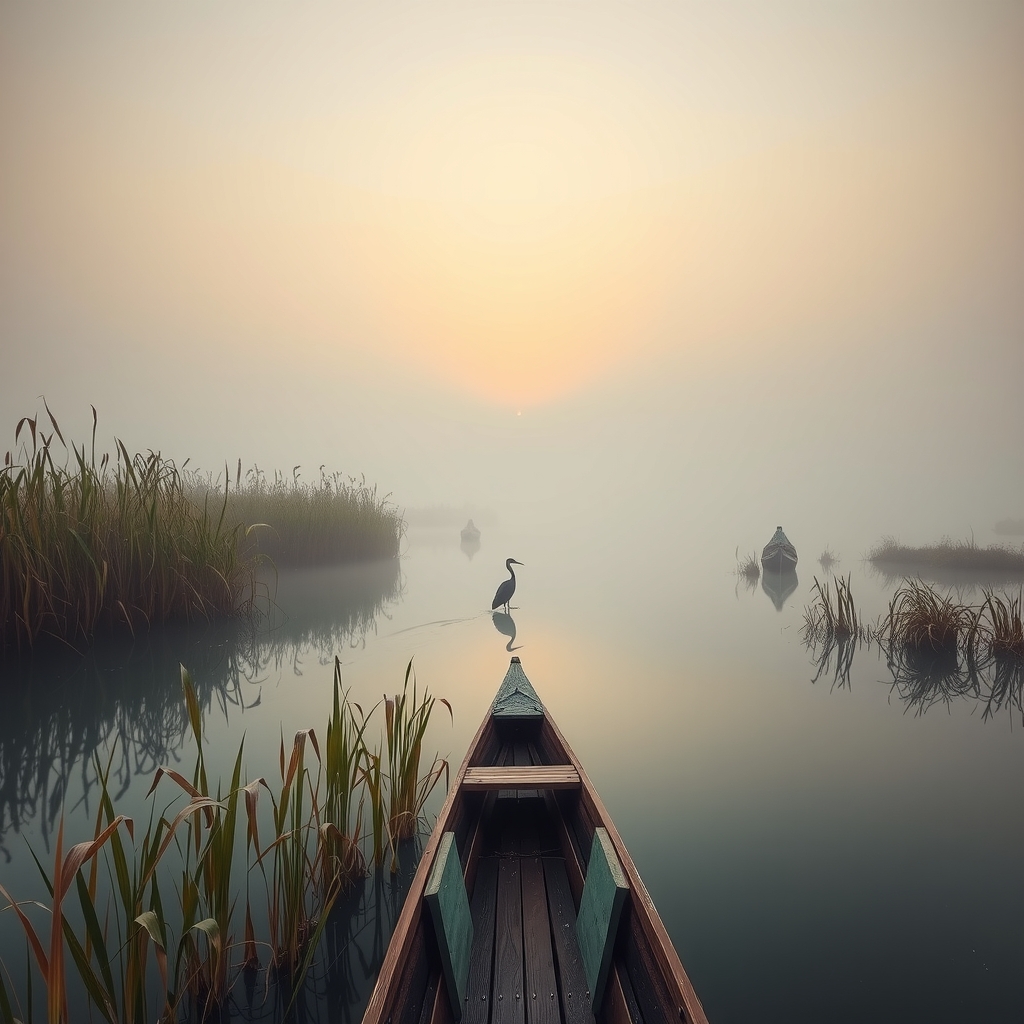
First light over the Mesopotamian marshes: a narrow canoe gliding through tall reeds on still water.

Between the Tigris and the Euphrates

IRAQ
the first city

Before there were nations, there was this ground. Writing was invented here. The first cities rose here. The first laws were cut into clay here. Fifty centuries later, the same rivers still decide what the country can become.

~48 millionpeople, second largest in the Arab world
6,000+ yearsof continuous urban life
145 billionbarrels of proven oil reserves
01 — The land

Two rivers, one country

Iraq is a desert state with a heart made of water. Everything that has ever mattered here happens in the green ribbon between the Tigris and the Euphrates, from the mountains of the north to the marshes where the two rivers finally meet.

Geography decided the history. The rivers carry snowmelt from Anatolia and the Zagros down into a plain so flat that water spreads wide and slow, leaving silt that grows wheat without effort. That is why the world's first farmers settled here, and why the world's first cities could feed themselves without every hand in a field.

North of Baghdad the land climbs toward Kurdish mountains. West of the Euphrates it turns to true desert, empty to the Jordanian and Syrian borders. In the south it softens into marsh, where reed houses and canoes survived for millennia and where the water has been fought over for a century.

The country is about 438,000 square kilometres, roughly the size of California, and almost all of its people live on a fraction of it. Baghdad, Basra, Mosul, Erbil, Najaf, Karbala: the names are ancient because the logic of the rivers has never changed.

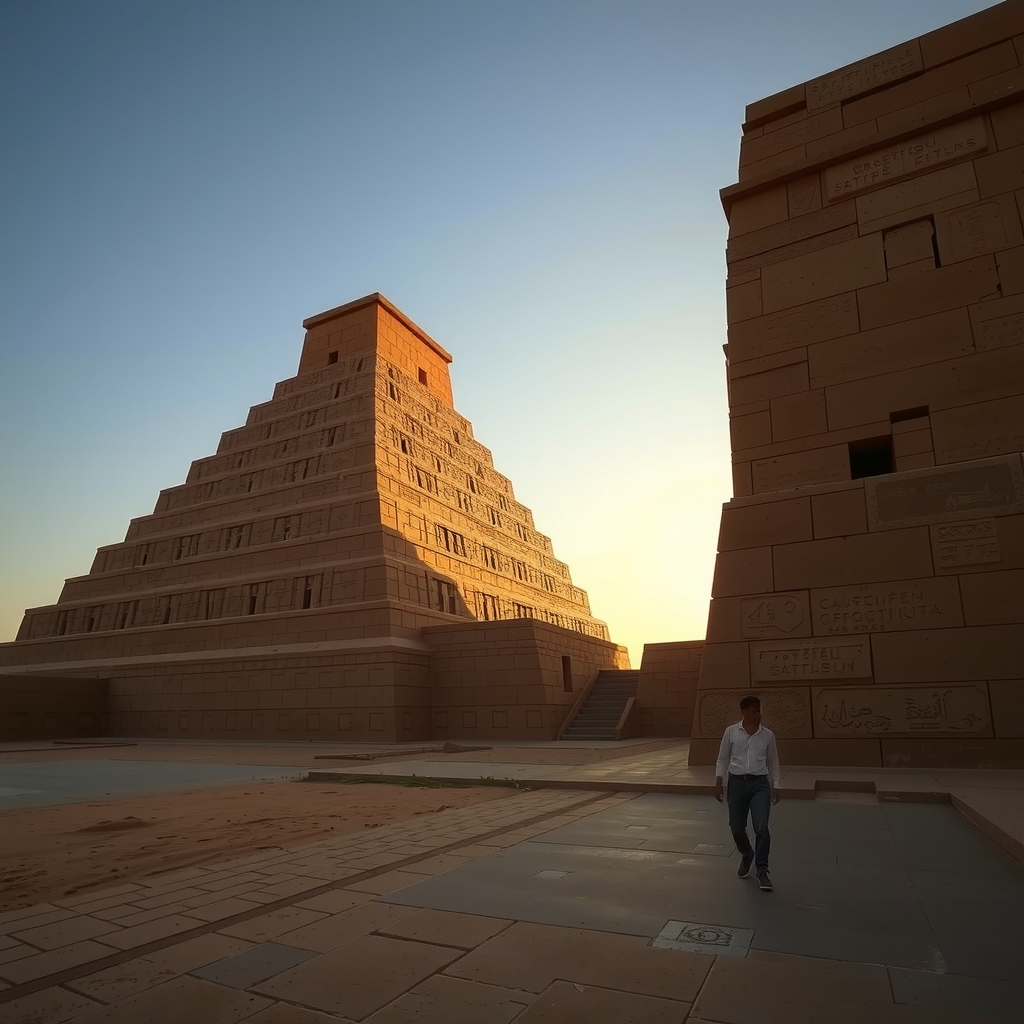
The Great Ziggurat of Ur at golden hour: stepped mudbrick terraces rising from the plain.
The Great Ziggurat of Ur, raised around 2100 BCE under Ur-Nammu and still standing on the plain.
Capital
Baghdadfounded 762 CE
Area
438,317square kilometres
Population
~48mestimate, 2026
Median age
~21one of the youngest on earth
02 — The invention

The day someone wrote it down

Around 3200 BCE, in the city of Uruk, someone pressed a reed into wet clay to keep count of barley and sheep. That small administrative trick became writing, and with it history itself.

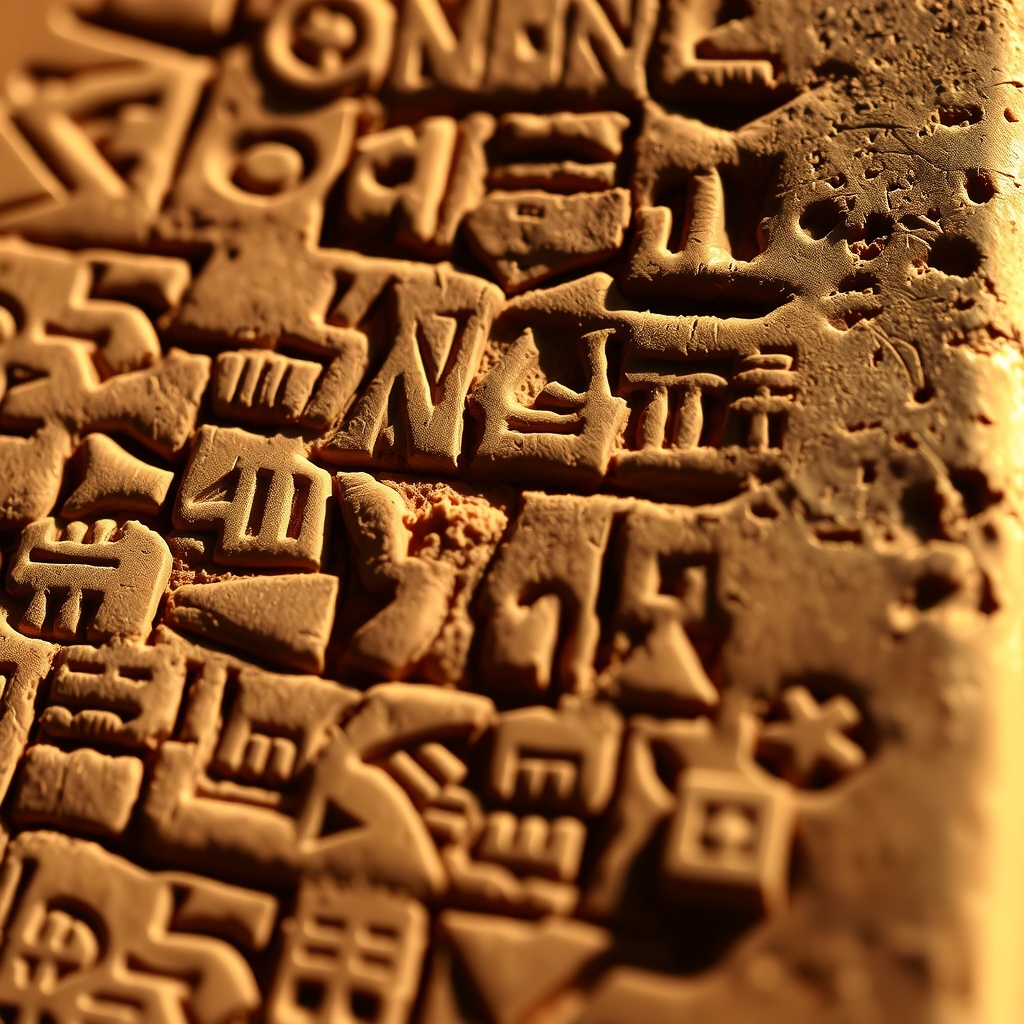
Extreme close-up of an ancient clay tablet covered in pressed cuneiform wedge marks.
Cuneiform: wedge-shaped signs pressed into clay, used for over three thousand years.

Everything begins here. The earliest tablets are receipts, not poems: rations, herds, temple stores. Bureaucracy came before literature, which is a very Mesopotamian fact. Within centuries the same script carried law, myth, mathematics and astronomy.

The Code of Ur-Nammu, cut around 2100 BCE, is the oldest surviving law code and predates Hammurabi by roughly three centuries. It sets fines in silver, rules on marriage and inheritance, and prescribes punishment for murder, robbery and false accusation. It is the ancestor of every statute written since.

Then came the second great transmission. In Baghdad's House of Wisdom, from the eighth century onward, scholars translated Greek, Persian and Indian science into Arabic, and added to it: algebra, optics, hospitals, the decimal idea moving west. Baghdad was, for a time, the largest city on earth.
03 — The cities

Six names that hold the country

Iraq is not one story. It is a federation of very different places, each with its own history, dialect and grievance.

01

Baghdad

Capital, on the Tigris

Founded in 762 CE as the Round City of the Abbasids, then the centre of the world's learning. Today a city of more than seven million, ringed by the highways of a century of wars, and still the place where every national bargain is struck.

02

Basra

The southern gateway

Iraq's port and oil capital, set where the rivers become the Shatt al-Arab. Nearly all of the country's crude leaves through terminals nearby. Its summer heat and its salt-damaged water are the sharpest edge of the climate problem.

03

Erbil

Capital of the Kurdistan Region

Built around a citadel mound occupied for more than six thousand years, and now a fast, comparatively stable commercial city. Erbil is the seat of a regional government with its own parliament, budget and armed forces.

04

Najaf

Shia spiritual centre

Home to the shrine of Ali ibn Abi Talib and one of the two great seminaries of Shia scholarship. Its clerical authority reaches far beyond Iraq's borders, into Lebanon, Iran, Pakistan and the Gulf.

05

Karbala

The place of mourning

The site of the 680 CE battle that split Islam's Shia and Sunni paths. Each year millions of pilgrims walk to it for Arbaeen, one of the largest human gatherings on earth, arriving on foot from as far as Basra and beyond.

06

Mosul

The northern hinge

Once a trading city where Arabs, Kurds, Assyrians, Turkmen and Yazidis lived streets apart. Rebuilt slowly after its destruction between 2014 and 2017, its old city remains the clearest measure of what reconstruction actually delivers.

04 — The engine

A country that lives on one number

Iraq holds the fifth-largest proven oil reserves on earth and depends on that oil for almost everything the state does. It is both the country's greatest asset and the reason its budget breaks whenever the price falls.

145billion barrels
Proven reserves
Fifth in the world. Roughly a tenth of the global total, sitting under the southern desert and the marshes.
3.8m b/d
Production average
Under OPEC+ quotas in 2026. The Oil Ministry publicly claims above five million a day; both figures are real, and they measure different things.
90percent
Of federal revenue
Oil funds the salaries, the army and the ministries. Non-oil revenue is a rounding error the state has promised for twenty years to fix.

The consequence is structural. When the barrel falls, the government cannot borrow its way out, so it delays payments to contractors, then to its own employees, and the political system absorbs a shock it was never designed for. Every reform programme since 2003 has promised to diversify; none has changed the ratio by more than a few points.

05 — The risk

The rivers are getting smaller

The oldest water civilisation on earth is running short of water. Upstream dams, drought and a warming climate have taken a third of the flow, and the south is salting up.

The marshes told the story first. The Mesopotamian Marshes were drained in the 1990s for political and military reasons, turning a wetland the size of a small country into cracked ground. After 2003 they partly refilled, then began shrinking again as drought and upstream diversion took hold. The Ma'dan, the marsh Arabs, went from living on the water to leaving it.

Downstream, Basra's Shatt al-Arab has grown saltier as seawater pushes in and river flow falls. Farms that once grew rice and dates now struggle with brackish water, and in bad years the city's taps run salty. Summer temperatures in the south now pass 50C.

Water is not a future risk here. It is a current bargaining position with Turkey and Iran, and it is the reason agriculture, which once employed a large share of Iraqis, keeps shrinking toward a few irrigated districts.

06 — Right now

Baghdad, live

The map refreshes: current conditions in the capital, pulled the moment you loaded this page.

Baghdad, Iraq

connecting…
Local time
--:--
Temperature
--°
Feels like
--°
Humidity
--%
Wind
--
Sunset
--:--

Weather from Open-Meteo, a free open data service. If it fails to load, the rest of this page is unaffected.

Every city on earth is a descendant of this one place.